
Most hidden leaks in Everett homes are found by accident. Someone moves a storage bin in the garage and finds the cardboard underneath gone soft, or notices that the crawl-space hatch smells like a greenhouse. By then water has usually been moving for weeks, because the ground and the air here are damp enough most of the year to mask the early signs.
Start with the meter, not the walls
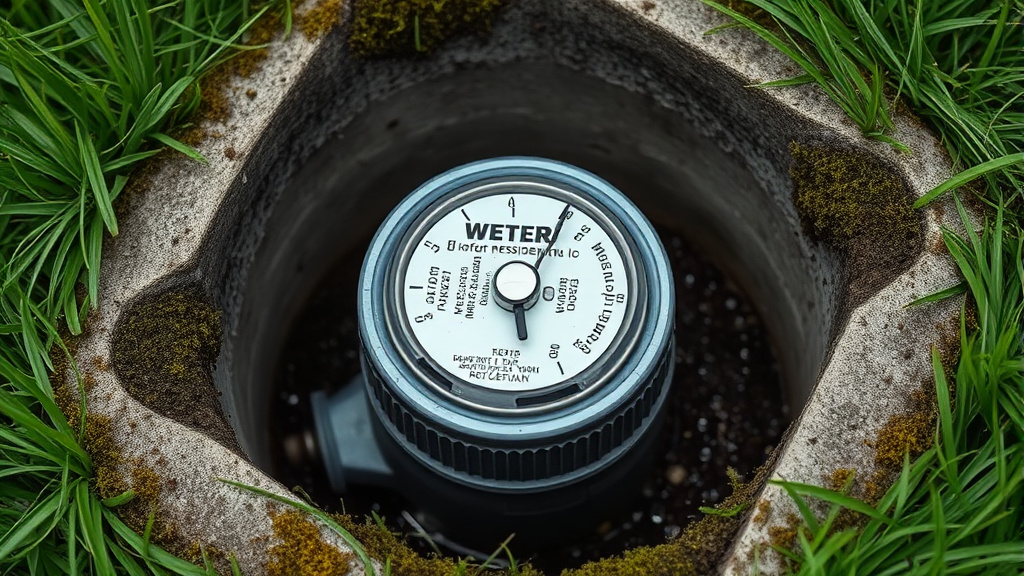
Before anyone opens drywall, the meter settles the basic question: is water leaving the system at all? Shut every fixture off, make sure no appliance is mid-cycle, and watch the dial or the low-flow indicator for several minutes. Movement with nothing running means water is escaping between the meter and the house, or inside it. No movement over a long watch points the search toward rainwater intrusion, a roof or siding problem, or condensation — a different trade and a different fix.
That one test saves a great deal of guessing, and it costs nothing. It is also the step most often skipped in favour of hunting for a stain.
Signs worth taking seriously
- A toilet that refills on its own at night, which is usually a flapper rather than a pipe, but reads the same on a bill.
- A warm patch on a floor in a house without radiant heat, pointing to a hot water line below the slab.
- Paint or joint compound that stays faintly tacky on one section of wall while the rest is dry.
- A musty smell that strengthens when the furnace or air handler runs and pulls air from a crawl space.
- A corner of yard that stays spongy through a genuinely dry week in late summer.
Any one of these on its own is weak evidence. Two of them in the same part of the house is worth investigating properly, and knowing what the early signals look like is most of what separates a small repair from a reconstruction.
How leaks are actually located
Finding water is easy; finding where it came from is the work. Water travels along joists and under subfloor before it shows itself, so the wet spot and the leak are often rooms apart.
Acoustic listening
A pressurised line pushing water through a small opening makes a specific sound, and ground microphones and contact probes let a technician trace that sound across a floor or along a yard until it peaks. It remains the primary method for pressurised supply lines, and it works best when the house is quiet.
Thermal imaging
An infrared camera reads surface temperature, not moisture. What it reveals is the cool signature of evaporating water or the warm track of a hot line, which is enough to narrow a search area before anything is opened up. It is a pointing tool rather than a verdict.
Moisture meters and probes
Pin and pinless meters confirm whether a wall cavity or a stretch of subfloor is actually wet, and how far the wet area extends. This is how the boundary of a repair gets drawn.
Tracer gas and camera inspection
For a line under concrete or a slow drain leak, a safe gas mix can be introduced and followed to its escape point, and a camera run through a drain or sewer line shows breaks and separations directly rather than by inference. For a sense of how these methods get combined on a real job, everettdraincleaning.com is a reasonable place to read further.
What the local climate changes
Snohomish County rarely freezes deeply, so buried lines here usually fail from corrosion, soil movement or a nicked pipe rather than from frost. The real local complication is that saturated ground absorbs a leak without complaint — a break that would surface as a puddle in drier soil simply drains away, which is why yard leaks here tend to be found by the bill rather than by the eye. Exposed pipe in a crawl space, an unheated garage or along an exterior wall is the genuine cold-weather risk, and insulation on those runs is cheap insurance before the first hard night.
Damp also means that a leak which goes unresolved turns into a mould and rot problem faster than it would elsewhere. Catching a leak before the damage shows matters more here than in a dry climate, not less.
Worth doing before anything is wrong
A meter reading noted once a season gives you a baseline to compare against. Shutoff valves that have been turned at least once a year will actually close when needed. Knowing where the main shutoff is, and that it works, is the difference between a wet floor and a wet house. None of it is complicated, and all of it is easier to do on a dry Saturday than at the moment you discover you need it.